
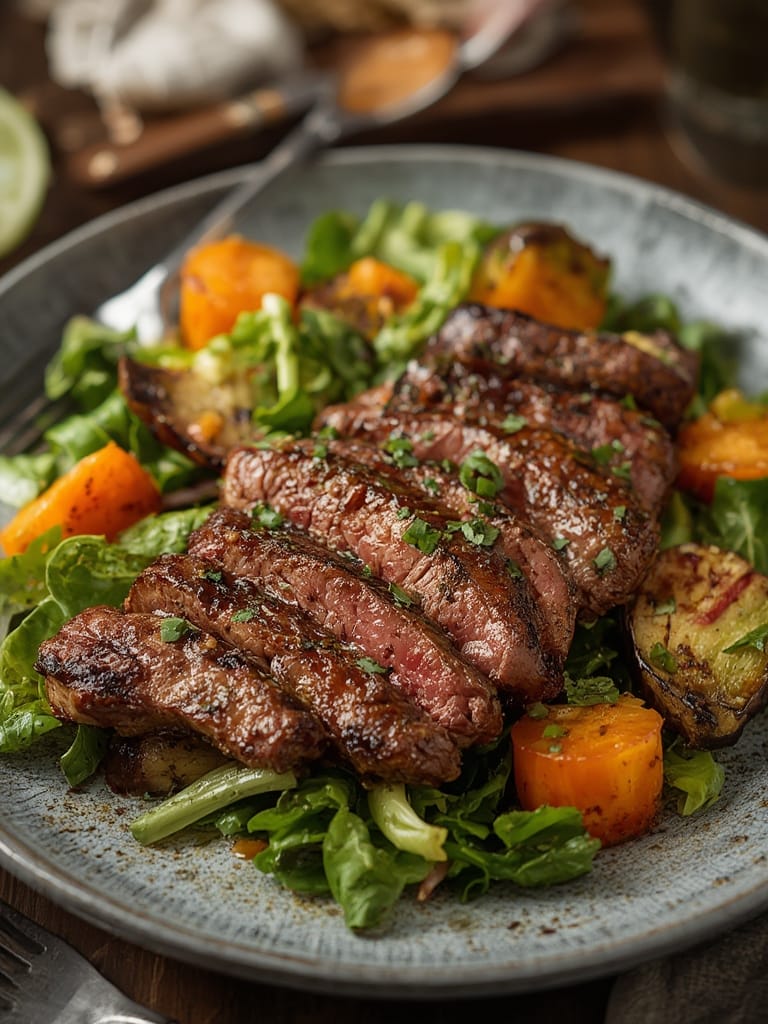
How to Choose the Best Steak for Salad: Cuts & Cooking Tips
Ever wondered why some steak salads leave you completely satisfied while others fall flat? The secret lies in selecting the best steak for salad. A perfectly cooked steak can transform a simple bowl of greens into a restaurant-worthy meal that’s both nutritious and indulgent.
Whether you’re meal prepping for the week or hosting friends for lunch, knowing which cuts work best and how to prepare them will elevate your salad game instantly.
Table of Contents
Ingredients List
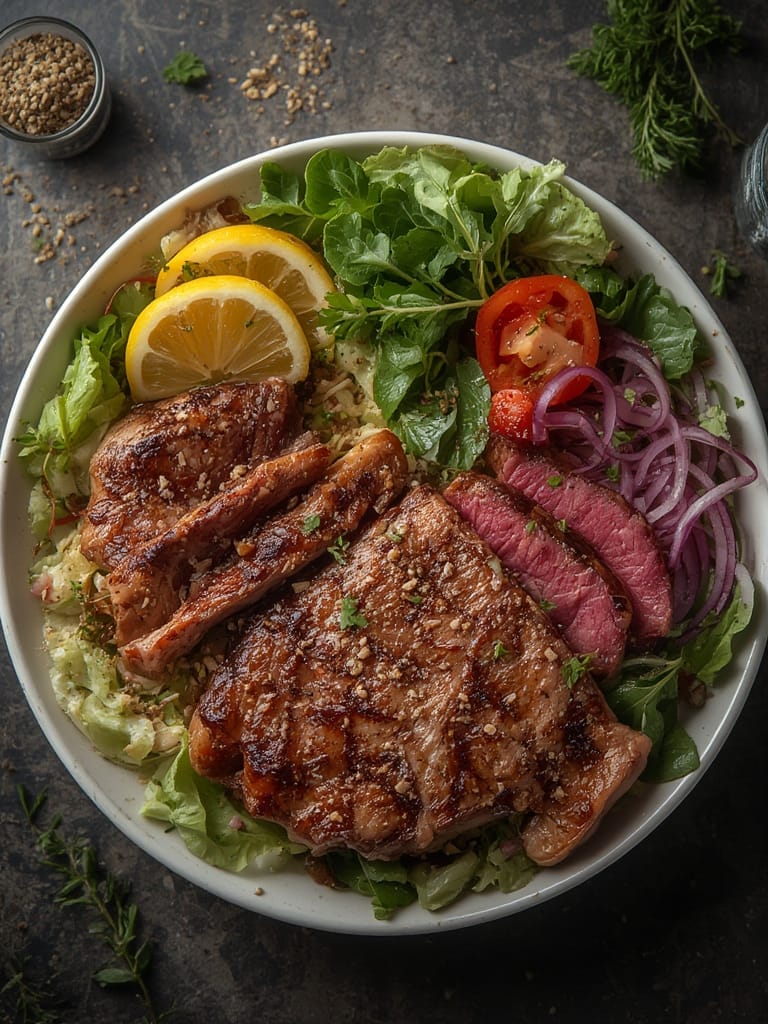
- 8-10 oz flank steak, sirloin, or ribeye (room temperature)
- 2 tablespoons olive oil
- 1 tablespoon kosher salt
- 2 teaspoons freshly ground black pepper
- 1 teaspoon garlic powder
- 6 cups mixed greens or arugula
- 1 cup cherry tomatoes, halved
- 1/2 red onion, thinly sliced
- 1 avocado, diced
- 1/4 cup crumbled blue cheese or feta
- 2 tablespoons balsamic glaze
Substitutions: Replace flank steak with skirt steak for a more intense flavor. For a lighter option, use filet mignon. Vegetarians can substitute with grilled portobello mushrooms or plant-based steak alternatives.
Timing
- Prep Time: 15 minutes (includes bringing steak to room temperature)
- Cooking Time: 8-10 minutes (plus 5-10 minutes resting time)
- Total Time: 30 minutes
This quick-cooking meal saves at least 20 minutes compared to traditional stew-like beef dishes, making it perfect for weeknight dinners when you want something satisfying but don’t have hours to spend in the kitchen.
Step-by-Step Instructions
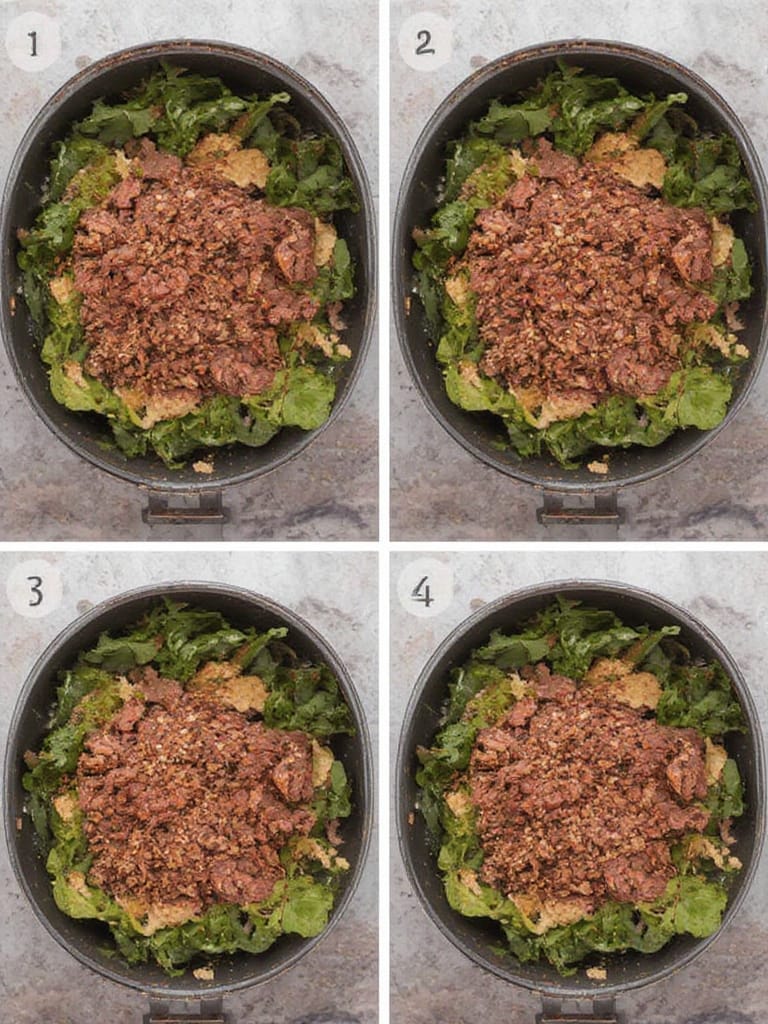
Step 1: Prepare the Steak
Remove steak from refrigerator 20-30 minutes before cooking. Pat dry with paper towels—this crucial step ensures better browning. Season generously with salt, pepper, and garlic powder on both sides, pressing seasonings into the meat.
Step 2: Cook to Perfection
Heat a cast-iron skillet over high heat until smoking. Add olive oil and carefully place the steak in the pan. For medium-rare, cook 3-4 minutes per side (adjust based on thickness). Pro tip: Touch the steak—it should feel like pressing on the base of your thumb when touching your middle finger to your thumb.
Step 3: Rest and Slice
Transfer cooked steak to a cutting board and let rest for 5-10 minutes. This redistributes juices for maximum flavor. Slice thinly against the grain at a 45-degree angle for the most tender bites.
Step 4: Assemble the Salad
Arrange mixed greens on a large platter. Layer with cherry tomatoes, red onion, and avocado. Place sliced steak on top and sprinkle with cheese. Finish with a drizzle of best dressing for steak salad like balsamic glaze or a light vinaigrette.
Nutritional Information
Per serving (based on 2 servings):
- Calories: 450
- Protein: 35g
- Carbohydrates: 12g
- Fat: 30g (10g saturated)
- Fiber: 5g
- Iron: 20% DV
- Vitamin A: 45% DV
- Vitamin C: 35% DV
Healthier Alternatives for the Recipe
- Lower Carb: Skip the balsamic glaze and use lemon juice with olive oil instead.
- Lower Fat: Choose leaner cuts like sirloin or tenderloin; use reduced-fat cheese.
- Vegetarian Option: Replace steak with grilled portobello mushrooms marinated in balsamic vinegar.
- Dairy-Free: Substitute cheese with nutritional yeast or avocado for creaminess.
Serving Suggestions
Serve this robust salad on large, chilled plates for the best presentation. Pair with a crusty whole grain bread for a complete meal, or add roasted sweet potatoes for extra satisfaction. For beverages, a light red wine like Pinot Noir or a crisp IPA complements the savory flavors perfectly.
Common Mistakes to Avoid
- Overcooking the steak: Use a meat thermometer for precision—135°F for medium-rare.
- Not resting the meat: Skipping this step results in juices on your plate instead of in your meat.
- Slicing with the grain: Always cut against the grain for tender bites.
- Overdressing the salad: Start with less dressing than you think you need—you can always add more.
Storing Tips for the Recipe
Keep leftover components separate when storing. Refrigerate cooked steak for up to 3 days in an airtight container. For meal prep, prepare all ingredients but store the dressing separately and add avocado just before serving. Cold steak makes excellent next-day lunch salads—no reheating required!
Conclusion
Finding the best steak for salad doesn’t have to be complicated. With the right cut, proper cooking techniques, and complementary ingredients, you can create a satisfying meal that’s both nutritious and delicious. Try this recipe this week and experiment with different cuts to find your personal favorite. Your feedback helps our community grow, so drop a comment letting us know which steak cut became your salad superstar!
FAQs
- What’s the most tender cut of steak for salads?
Tenderloin (filet mignon) is the most tender, though flank and skirt steak, when sliced properly, offer excellent tenderness with more flavor. - Should steak be warm or cold in salads?
Both work! Warm steak wilts greens slightly for a different texture experience, while cold steak is perfect for meal prep and summer meals. - How thin should I slice steak for salad?
Aim for 1/4-inch thick slices cut against the grain for the best eating experience. Thinner slices work better in salads than thick chunks. - Can I marinate steak for salad?
Absolutely! A 1-2 hour marinade with olive oil, garlic, and herbs adds tremendous flavor, but avoid overly sweet marinades that can burn during cooking.
Did You Try Our Recipe?
There are no reviews yet. Be the first one to write one.